UNICEF is selecting up to 12 young climate leaders advancing climate education worldwide.
🌍 Last call to apply — help shape the future of climate education with UNICEF
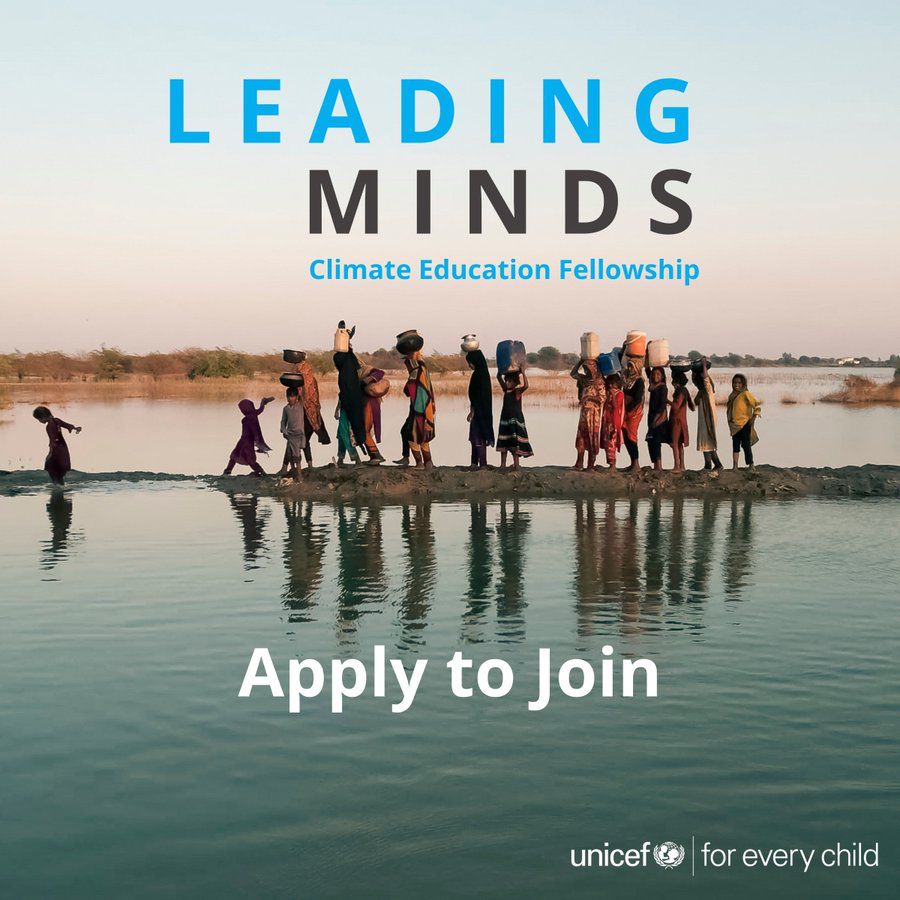
Climate education has moved beyond awareness. Today, it’s about building real capacity for change.There’s still time to apply for this powerful changemaker opportunity.
Submit your application and join this 18-month journey to reimagine climate education for people and the planet.
Apply by Jan 6, 2026, here: https://www.unicef.org/innocenti/leading-minds-fellowship-climate-education
Are you passionate about climate education and transforming the way the world responds to the climate crisis?
This is your chance to help reimagine climate education, so that every child, everywhere, grows up prepared, empowered, and able to shape a just and sustainable future.
As a Leading Minds Climate Education Fellow, you will join a global cohort elevating youth-led initiatives, conducting research and foresight, shaping policy and helping design strategic convenings. Selected initiatives are eligible to receive grant support of up to $20,000.
Lead the future of climate education
UNICEF is selecting up to 12 young climate leaders who are strengthening climate education in their schools, communities, and countries in both formal and informal settings.
Key Details
🌍 Ages: 10–30
🔎 Focus areas: climate action, child rights, education, foresight, advocacy, or storytelling
⏱️ Commitment: ~4–5 hours/week (Feb 2026 – Jun 2027)
🌐 Global call: open to applicants from all regions
💼 Support: stipend + potential Bright Spot grants
A youth-led climate education initiative can include, for example:
- School system integration: curriculum development, educational networks, or school-based climate clubs;
- Government partnerships: collaborative models working with education authorities or policymakers;
- Rights-based and justice frameworks: initiatives linking climate education to equity, justice, and human rights;
- Community resilience and informal education: local projects, campaigns, or community-led learning; and
- Digital campaigns and media: online platforms, storytelling, or awareness-raising initiatives.
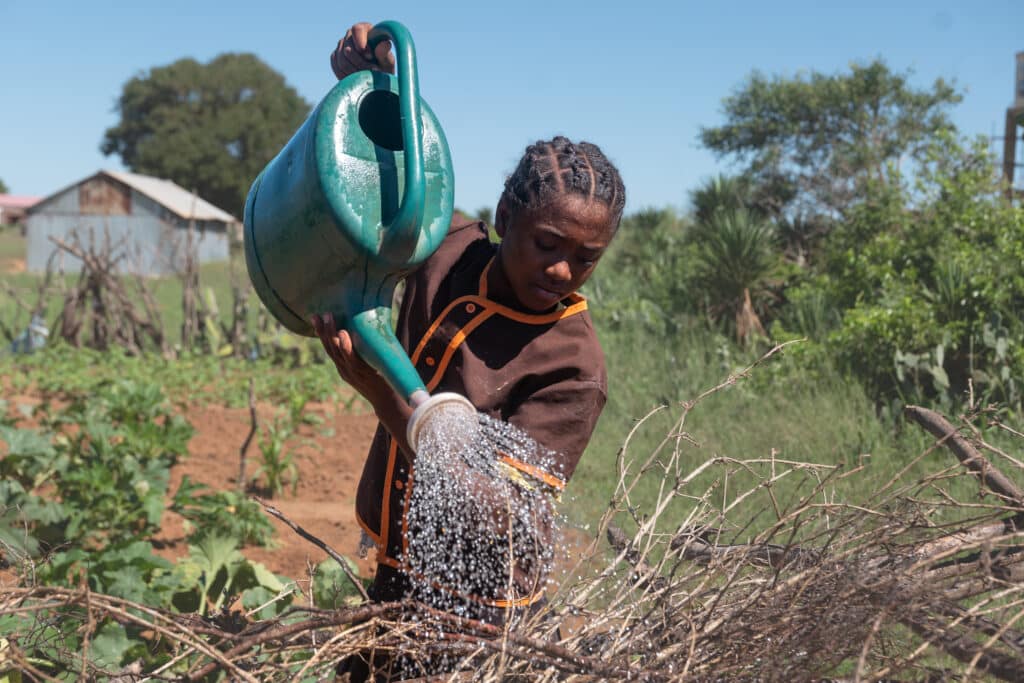
On March 7, 2025, at the Public Primary School of Terabovo in Sihanamaro commune, Androy region, Madagascar, 13-year-old Stephanie, a 5th-grade student, waters the school’s vegetable garden, which supplies fresh produce for the students.
(PHOTO: © UNICEF_UNI769021_Andrianantenaina)
UNICEF, with the support of the Princely Government of Monaco, supports the government in combating all forms of malnutrition and implementing the National Multisectoral Nutrition Action Plan, which aims to strengthen human capital development, including early childhood. Early childhood development (ECD) is a key factor in enabling children to reach their full potential, as adversities experienced during this period impact their future skills. In this context, ECD interventions are being implemented in four districts through 101 community nutrition sites and at the Intensive Nutrition Recovery and Education Center (CRENI) in Tsihombe.