As proposed protections for children and commitments on fossil fuels disappear from the latest COP31 negotiating draft, young climate advocates call on world leaders to prioritize children’s rights, protect their education and give their generation reasons to hope.

FOR IMMEDIATE RELEASE
By Andrea Koehle Jones | Climate Journalist and Founder, The ChariTree Foundation
ANTALYA, TÜRKİYE | November 19, 2026 — In the final hours of what is shaping up to be a deeply disappointing COP31 climate summit, negotiators are working toward a global agreement amid growing concerns over weakened commitments on fossil fuels, climate finance and children’s rights.
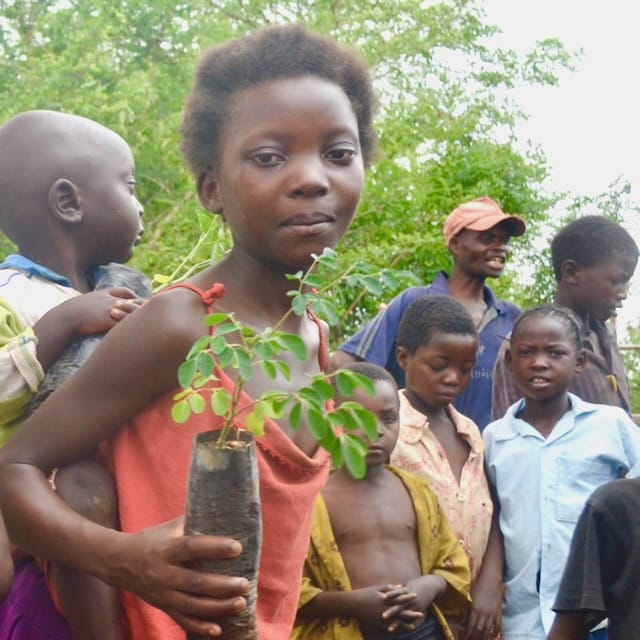
The latest draft cover decision, released November 19, removes proposed provisions that explicitly recognized children’s disproportionate vulnerability to climate change, called for their needs to be prioritized in national climate planning and encouraged investment in climate-resilient education and essential services.
A comparison of the official UNFCCC drafts from November 16 and November 19 confirms that these child-focused proposals, which had not been agreed upon by governments, are absent from the revised text.
Although negotiations remain underway and the draft could still change, their removal raises urgent questions about whether children’s rights are being adequately prioritized in the proposed agreement.
According to UNICEF’s 2026 Children’s Climate Risk Report, 1.1 billion children — nearly half the world’s children — are exposed to at least three overlapping climate hazards, threatening their health, education and well-being.
Yet as COP31 negotiations continue in Antalya, young climate advocates remain hopeful that world leaders will heed the messages they have been delivering throughout the summit:
Children need more than promises. They need their rights protected, their voices heard and genuine reasons to hope.
Children’s rights must not disappear from climate negotiations
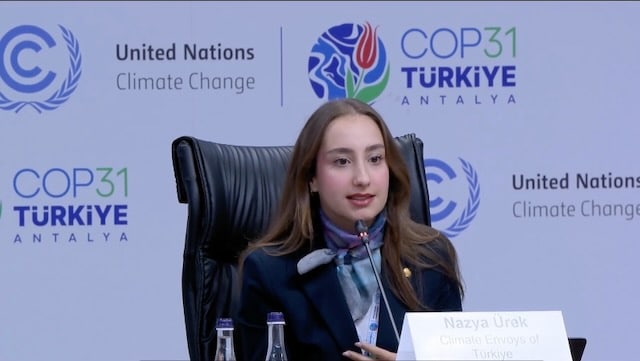
(Photo: Screenshot from UNFCCC COP31 event recording.)
The November 16 draft included important provisions explicitly addressing children’s needs.
Paragraph 108 recognized that children and young people are disproportionately affected by climate change and invited governments to make the impacts on children a primary consideration in national climate planning and implementation.
Paragraph 110 encouraged governments and other actors to strengthen climate- and water-resilient health, education and sanitation systems to safeguard children’s access to essential services.
Neither proposed provision appears in the November 19 revised draft.
Although the revised draft retains language recognizing meaningful participation by children and young people, it contains no explicit reference to education.
The distinction matters.
Recognizing children’s voices is not the same as protecting their rights.
The UN Convention on the Rights of the Child establishes children’s rights to education, health, participation and consideration of their best interests. The UN Committee on the Rights of the Child has further clarified governments’ responsibilities concerning climate change and environmental harm.
These rights do not disappear when climate negotiations become politically difficult.
The removal of child-focused language from the draft cover decision does not erase governments’ existing obligations. But it raises serious concerns about whether those obligations are being adequately reflected in the summit’s proposed outcome.
Young climate leaders confront anxiety and political inaction
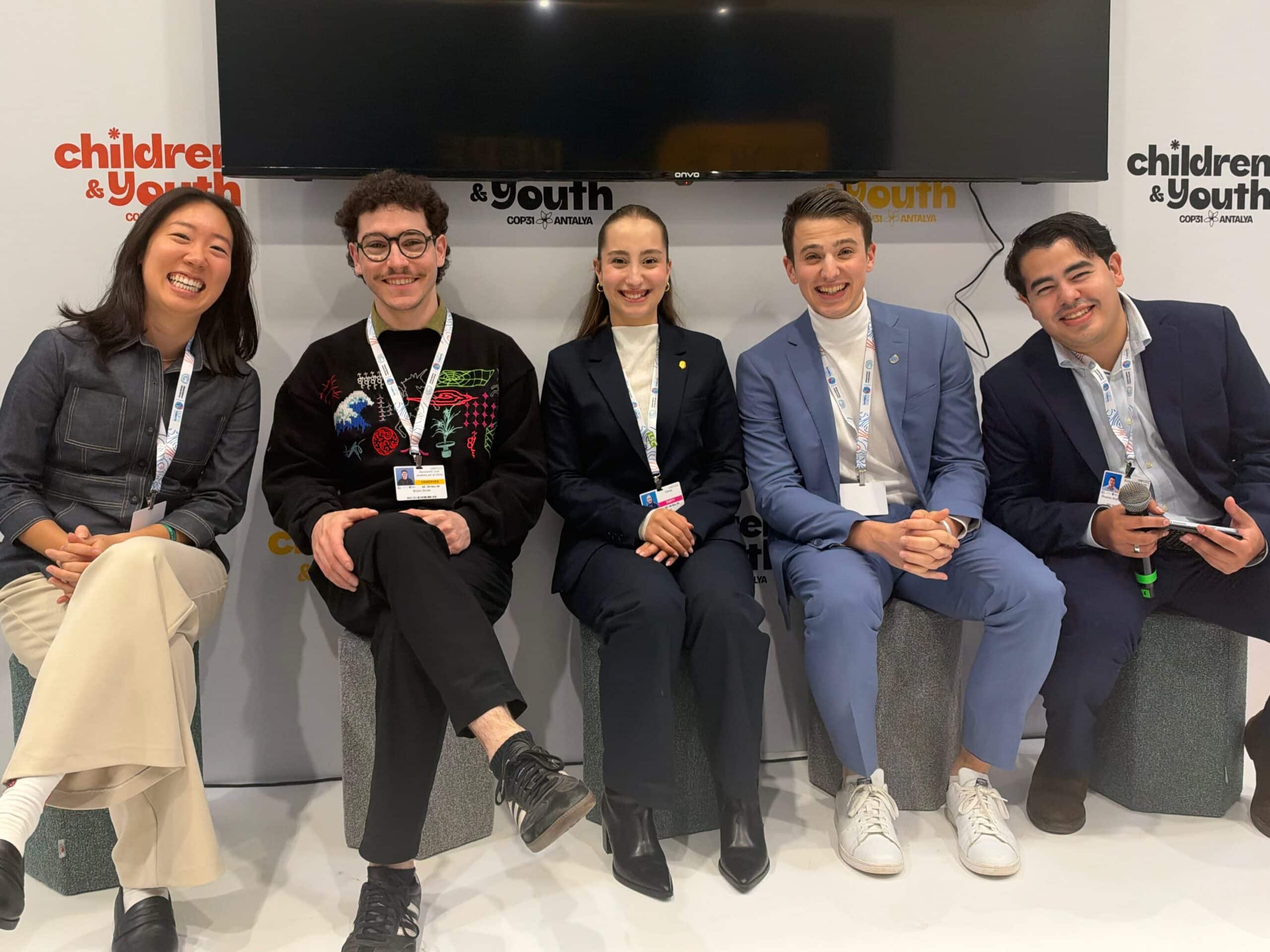
While interviewing and photographing young climate leaders at COP31 in Antalya, Canadian climate journalist and children’s environmental advocate Andrea Koehle Jones heard a powerful message emerging.
Despite their different backgrounds, young advocates from Germany, Argentina, Türkiye and Romania share deep concerns about their futures and a determination to transform climate anxiety into hope and meaningful action.
“It’s a constant struggle between hope and helplessness,” says Joshua Steib, 23, a UNICEF Senior Fellow from Germany.
“When I went to my first COP in Glasgow in 2021, I genuinely believed we could still turn things around in time. Today, four COPs later, I’m a bit more realistic about how difficult that will be.”
Yet Steib remains hopeful.
“For me, hope is much more about what we actually do.”
For Bruno Sirote, 24, a UNICEF Innocenti Youth Fellow from Argentina and International Policy Coordinator at Jóvenes por el Clima Argentina, climate anxiety once felt overwhelming.
“Climate change used to make me feel desperation, a feeling so powerful that it overtook me completely,” he recalls.
Sirote believes the emotional burden is intensified when young people feel excluded from decisions shaping their future.
“Leaders should understand that it’s not only the crisis itself affecting mental health but the inability to influence decisions at the levels that count that causes despair.”
Their experiences expose a painful contradiction: young people are celebrated as climate leaders while governments struggle to deliver the commitments necessary to protect their futures.
Climate education is a right — and a pathway to hope
Despite the disappointing direction of COP31 negotiations, young advocates emphasize the transformative power of climate education, collective action and meaningful participation.
“If all we teach young people is how catastrophic climate change is, we shouldn’t be surprised when they feel anxious and helpless,” Steib warns.
“When young people become the ones driving climate education, they go from feeling powerless to realizing how much they can actually change.”
Nazya Ürek, 22, a UNICEF Innocenti Youth Fellow on Climate Education and National Coordinator of Türkiye’s Climate Envoys Platform, has brought this message directly to COP31.
Speaking at the COP31 Presidency’s Action for Climate Empowerment event on November 16, Ürek emphasized the urgency of transforming scientific understanding into action.
“The science is already clear, what we need now is a generation that understands it, believes in it and acts on it,” she said.
For Ürek, climate advocacy and education have helped transform uncertainty into determination.
“For me, taking action has become a way of responding to uncertainty rather than being consumed by it.”
Eva Tatu, 19, a Romanian COP31 Climate Youth Delegate and member of Romania’s National Consultative Body of Children and Youth on Climate and the Environment, also sees education as an essential response to climate anxiety.
“Climate anxiety is most often a direct response to uncertainty, a feeling of powerlessness, and the lack of information that reaches us.”
Tatu points to Romania’s Green Week, which integrates environmental education and sustainability skills into schools.
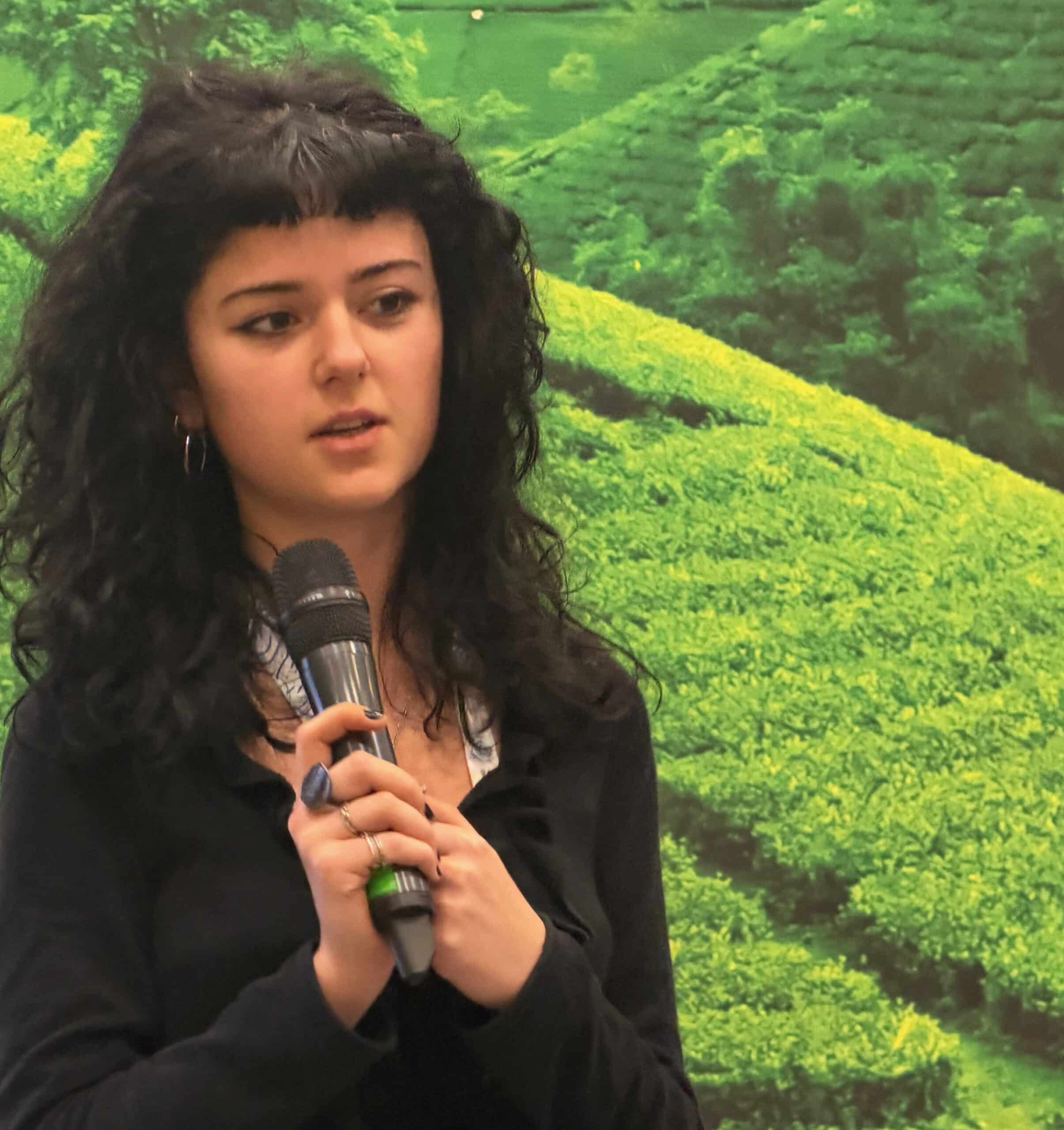
For her, participating in climate advocacy alongside other young people has been transformative.
“I think I grew truly hopeful for the future when I started getting involved in climate advocacy with other children and youth.”
Their voices reinforce the need for inclusive, accessible climate education that builds practical skills, resilience, confidence and hope.
Children need to fall in love with nature, not fear their future
For two decades, Koehle Jones has worked through Canada’s The ChariTree Foundation to connect children with nature and empower them to make a positive difference.
Her approach emphasizes that climate education must extend beyond alarming statistics and warnings about environmental destruction.
Children need opportunities to explore forests, investigate soil, plant trees, create nature-inspired art and restore local habitats.
They need opportunities to get muddy, ask questions, discover wildlife and experience the joy of being outdoors together.
These experiences foster scientific understanding, curiosity, creativity, resilience and a lasting connection with the natural world.
Climate education should be accurate, accessible, transformative and, above all, fun.
Because learning about nature is one thing. Falling in love with it is another.
And when children love nature, they are more inspired to protect it.
Nature-based education cannot replace governments’ responsibility to address the climate crisis. But it can help children develop the knowledge, confidence and emotional resilience to participate in creating a more sustainable future.
Give young people a voice, not the weight of the world
Young people are already demonstrating extraordinary leadership. But they should not be expected to compensate for the failures of governments.
“What they discuss as climate policies, targets, and negotiations is our lived reality,” Ürek says.
She also describes the responsibility young advocates feel when representing those excluded from international decision-making.
“Sometimes, having a seat at the table feels less like a privilege and more like carrying the responsibility of everyone who was never invited to sit there.”
Her warning to world leaders is unequivocal:
“We should not confuse giving young people a voice with giving them the responsibility of compensating for the failures of existing systems.”
Children did not create the climate crisis.
They should not carry the burden of solving it.
COP31 negotiators must restore children’s climate protections
As negotiations continue in Antalya, governments still have an opportunity to reverse the weakening of the draft and demonstrate that children’s rights are central to meaningful climate action.
World leaders must restore explicit recognition of children’s disproportionate vulnerability to climate change, prioritize children’s best interests in national climate planning and protect their access to education, health care and essential services.
They must also invest in climate-resilient schools, accessible mental health support, inclusive climate education — including outdoor and nature-based learning — and meaningful opportunities for children and young people to influence decisions.
These commitments must be supported by adequate child-responsive climate finance and credible action to reduce emissions and transition away from fossil fuels.
Climate education is essential, but education alone cannot protect children from a worsening climate crisis.
Children need both the knowledge to understand climate change and the assurance that governments are taking meaningful action to address it.
As COP31 negotiators work toward a final agreement, the message from young climate advocates is clear.
“Young people do not need to be told simply to remain hopeful. We need to be given reasons to have hope,” Ürek says.
The true measure of climate leadership will not be found only in emissions reduced or agreements signed. It will also be found in the childhoods we protect, the voices we elevate and the futures we make possible.
Hope grows when children feel safe, heard and empowered — and when they see adults turning promises into action.
Children are counting on us.
About Andrea Koehle Jones
Andrea Koehle Jones is a Canadian climate journalist, children’s environmental author and founder of The ChariTree Foundation, a member organization of Climate Action Network Canada (CAN-Rac).
A former CBC News writer and producer, she has spent two decades advocating for children’s rights, access to nature, environmental education and opportunities for young people to make a positive difference.
She is also an adviser to the UNICEF Innocenti Youth Fellowship on Climate Education and a mentor with Nature Canada’s Women for Nature initiative, championing children’s rights, youth leadership and accessible environmental education.
Through her journalism, writing and environmental advocacy, she works to inspire hope, empower young people and help children develop a lifelong love of nature.
About The ChariTree Foundation
The ChariTree Foundation is a Canadian children’s environmental organization dedicated to connecting children with nature and empowering them to make a positive difference. A member organization of Climate Action Network Canada, it advocates for accessible environmental education, children’s engagement with the natural world and opportunities for young people to contribute to a healthier planet.
Sources and further reading
- UNFCCC — COP31 Draft Cover Decision, November 16, 2026 — See paragraphs 108–110.
- UNFCCC — Revised COP31 Draft Cover Decision, November 19, 2026 — See paragraph 67.
- UNICEF — Children’s Climate Risk Report 2026
- UNICEF — Convention on the Rights of the Child
- Reuters — COP31 Draft Drops Fossil Fuel Language, November 19, 2026
Editor’s note: This release reflects the November 19 COP31 draft cover decision, not an adopted final agreement. Negotiations are ongoing, including separate discussions on Action for Climate Empowerment.
This release represents independent reporting and analysis and is not an official statement by UNICEF, Nature Canada or Climate Action Network Canada.